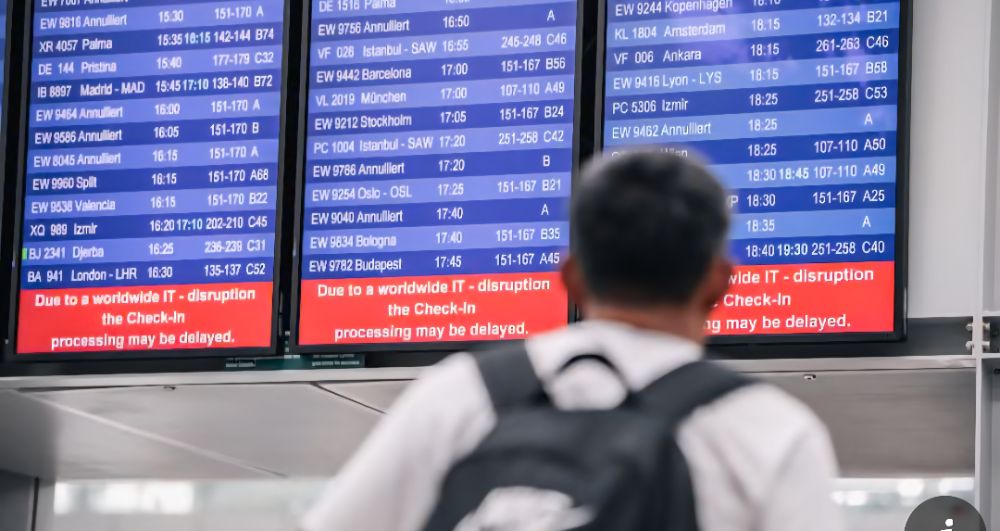
A wave of disruptions across critical sectors is raising serious questions about the reliability of the world's digital and economic infrastructure.
From grounded aircraft and banking troubles to Microsoft service disruptions and growing chaos in the artificial intelligence sector, a series of unsettling developments is fuelling concerns about whether the systems powering modern life are becoming increasingly vulnerable.
Air travel, financial services, cloud computing and artificial intelligence have become deeply interconnected pillars of the global economy. Any disruption in these sectors can trigger a chain reaction, affecting millions of people, businesses and essential services.
Grounded flights have raised concerns over aviation reliability, while banking-related troubles have once again highlighted vulnerabilities in the financial system. Meanwhile, Microsoft outages have underscored how heavily businesses and individuals depend on a handful of major technology platforms.
Adding to the uncertainty, the rapidly evolving AI industry is facing mounting questions over reliability, security, regulation and its impact on jobs and businesses.
The coincidence of these developments has sparked a broader debate: Is the world witnessing a series of isolated technical and economic setbacks, or are they warning signs of deeper weaknesses in the systems on which modern society depends?
Although there is no established evidence linking these incidents to a single cause, the growing dependence on interconnected digital infrastructure makes even isolated failures potentially far-reaching.
One question is becoming increasingly difficult to ignore: If flights, banks, technology platforms and AI systems can all face serious disruptions, how secure is the infrastructure that keeps the modern world running?











Comments
Sign in with Google to comment.