Washington, August 16, 2026:
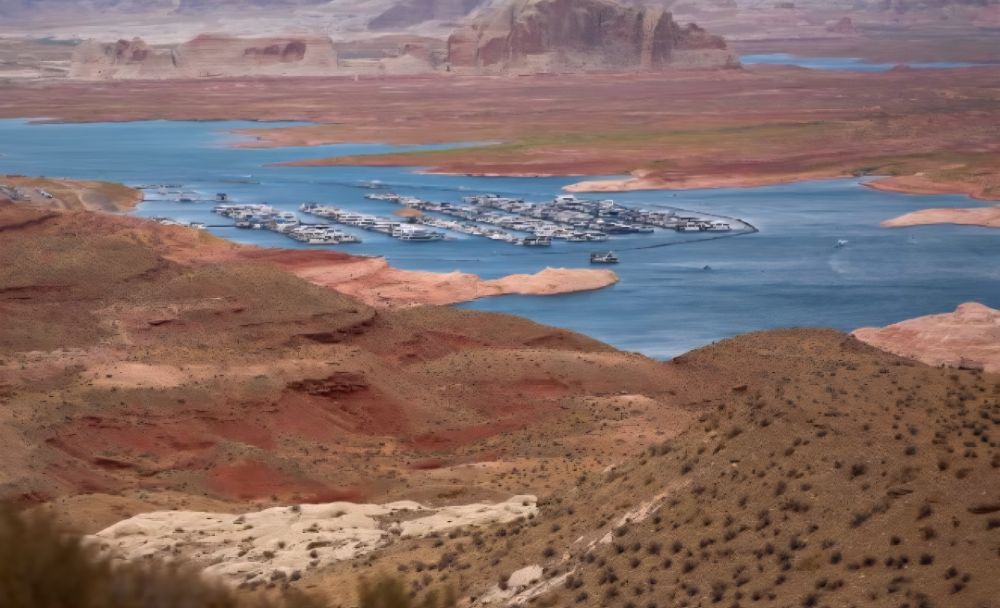
The United States is facing a fresh warning over its worsening water crisis after Lake Powell, the country’s second-largest reservoir, plunged to its lowest level on record. The reservoir, a crucial source of water and hydropower for the American Southwest, has now entered what experts describe as “uncharted territory.
” According to data from the U.S. Bureau of Reclamation, Lake Powell’s water level fell to around 3,519.91 feet above sea level, narrowly breaking the previous record low of 3,519.92 feet recorded in April 2023. The decline has intensified concerns over the future of the Colorado River system, which supplies water to around 40 million people across seven Western states.
The crisis is particularly worrying because Lake Powell is also vital for electricity generation. The reservoir sits behind Glen Canyon Dam, whose hydropower operations become increasingly threatened as water levels fall. Officials and water experts are closely watching the reservoir as it approaches critical elevations that could affect power production and downstream water management.
The alarming situation is not limited to Lake Powell. Lake Mead, the largest reservoir in the United States, also recently reached its own record low, leaving the two giant Colorado River reservoirs at historically depleted levels. Combined storage in Lake Powell and Lake Mead has fallen to its lowest point in nearly seven decades.
Experts say prolonged drought, rising temperatures, declining snowpack and continued demand for Colorado River water are driving the crisis. The Colorado River supports major cities, tribal communities and millions of acres of farmland, making the rapidly falling reservoir levels a major threat to the region’s long-term water security.
















Comments
Sign in with Google to comment.