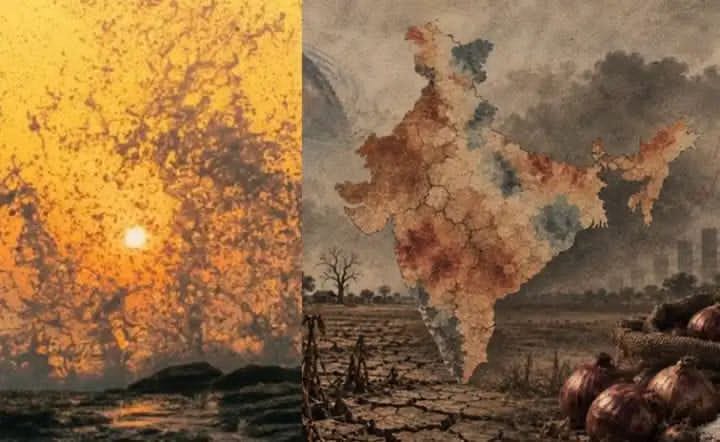
New Delhi: The ocean is heating up... the climate is changing... another major weather threat is looming over India like a cloud! Reports indicate that more than 180 scientists and environmental experts have warned that the extremely strong El Niño conditions, referred to as 'Super El Niño', may intensify in the coming months. Concerns are being raised that this development could impact agriculture, water resources, forests, and the fishing industry amid already weak rainfall and rising temperatures.
Impact until February 2027? According to the latest estimates released by the World Meteorological Organization (WMO) on September 3, El Niño has already stabilized in the Pacific. In the coming months, it is likely to strengthen further and reach 'very strong' levels. The WMO stated that there is nearly a 100% chance of El Niño continuing until February 2027. However, it also clarified that the impact may vary depending on the region.
What exactly is El Niño? El Niño is a natural climatic phenomenon characterized by unusually warm surface waters in the central and eastern Pacific Ocean near the equator. In the Niño 3.4 region, the sea surface temperature averaged +1.5°C above normal from May to July 2026, and in July, it reached +2.0°C. Weekly values recorded from late July to mid-August ranged from approximately +2.2°C to +2.6°C.
What impact will it have on India? If El Niño strengthens, significant changes in rainfall and temperatures are likely to occur. The WMO's estimates for July-September 2026 suggest below-normal rainfall in some regions of the Indian subcontinent. At the same time, it noted that higher temperatures, drought conditions, and the risk of extreme weather events could increase. Its impact is likely to be felt in climate-dependent sectors such as agriculture, water resources, forest areas, and the fishing industry.
Key note on 'Super El Niño': The WMO does not officially use the term "Super El Niño." In its official classification, El Niño is categorized as weak, moderate, strong, and very strong. Therefore, 'Super El Niño' is a term used in news reports, while the WMO refers to the current situation as **“Very Strong El Niño.”**














Comments
Sign in with Google to comment.