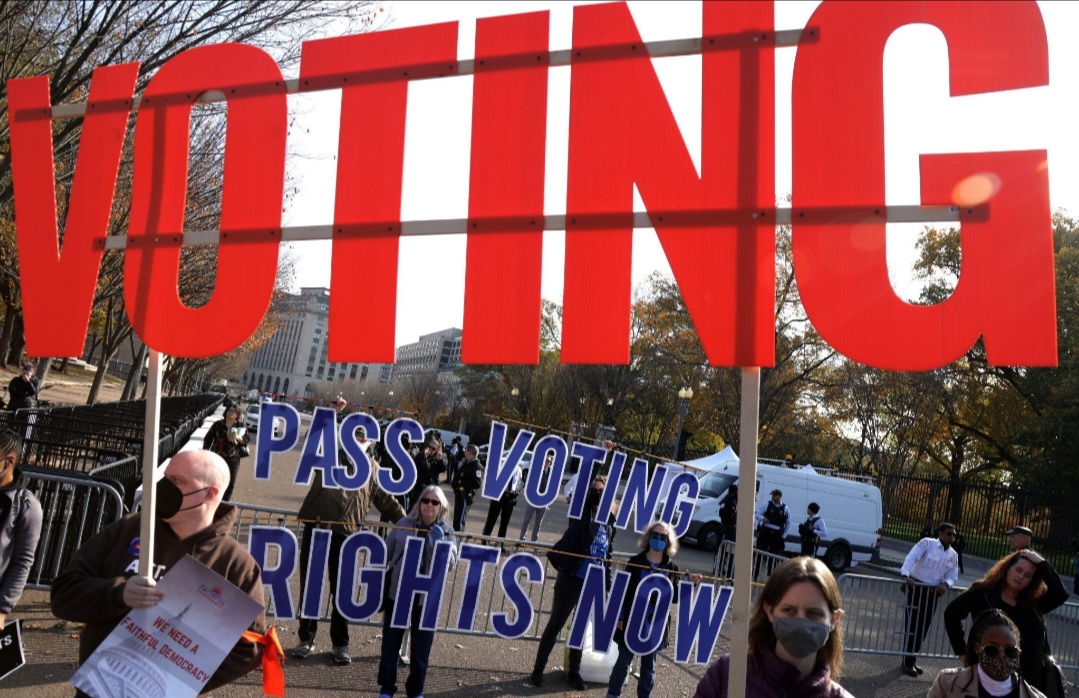
Washington, D.C. | April 30, 2026
In a landmark and deeply contentious ruling, the U.S. Supreme Court has significantly curtailed a key enforcement mechanism of the Voting Rights Act, opening the door for state legislatures to redraw electoral districts in ways critics say could dilute the voting power of racial minorities.
The decision effectively allows lawmakers to justify controversial district maps on the basis of “partisanship,” even when those maps may disproportionately impact minority communities. Legal analysts warn that this distinction makes it far more difficult to challenge discriminatory practices, as proving explicit racial bias is now a higher bar.
Civil rights organizations and voting rights advocates have reacted sharply, calling the ruling a major setback for democratic protections. They argue it weakens decades-old safeguards designed to ensure fair representation, particularly for historically marginalized groups. Critics also contend that the Court’s conservative majority is increasingly stepping back from its role in protecting minority rights against potential overreach by state governments.
Supporters of the ruling, however, maintain that it reinforces the constitutional authority of states to manage their own electoral processes. They argue that partisan considerations have long been a part of redistricting and that the Court is simply clarifying legal boundaries rather than endorsing discrimination.
The ruling arrives at a critical moment in U.S. politics, with upcoming midterm elections expected to test the strength of democratic institutions. Advocacy groups are now calling for renewed civic engagement, urging voters to participate not only in high-profile national races but also in state and local elections where district maps are drawn and policies take shape.
As the political fallout continues, the decision is likely to intensify debates over electoral fairness, judicial responsibility, and the future of voting rights in the United States.







Comments
Sign in with Google to comment.