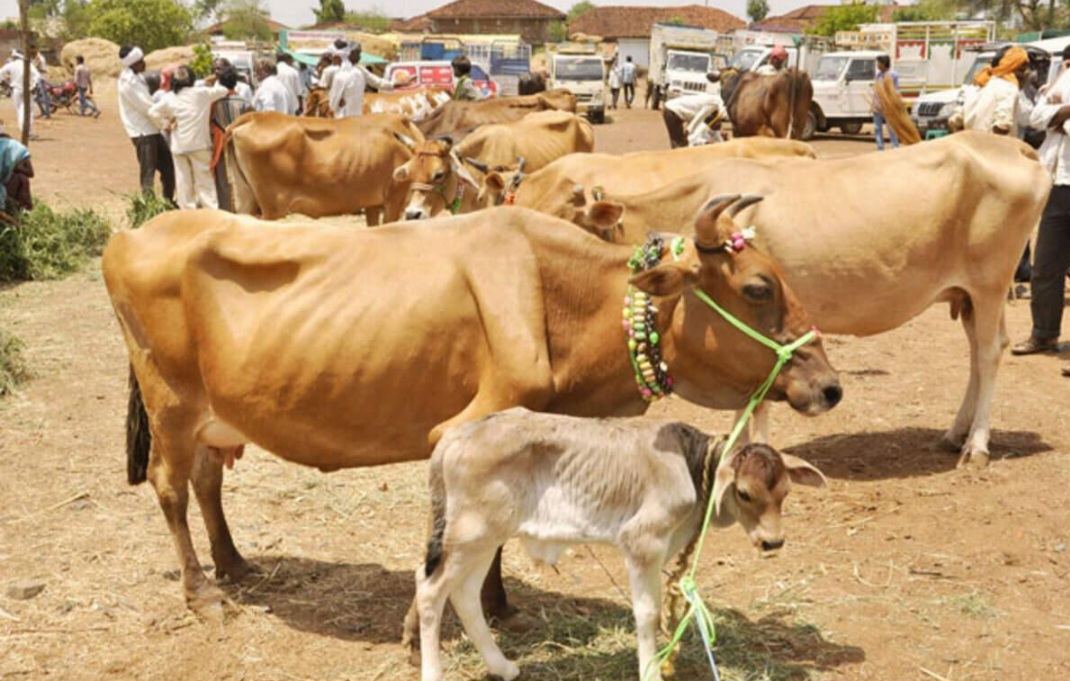
A recent editorial discussion in an Indian Telugu publication has reignited the long-standing and emotionally charged debate over cow slaughter, beef exports, and religious identity politics in the country. The issue has taken an unusual turn, with claims that even some voices within the Muslim community have expressed support for a cow slaughter ban and recognition of the cow as a national animal.
According to the commentary, statements attributed to religious figures, including scholars linked to prominent Islamic seminaries, have triggered fresh debate across political and social circles. The remarks have reportedly received mixed responses from cities such as Kolkata and Hyderabad, further intensifying the conversation around cow protection.

The editorial highlights the paradox surrounding India’s position in the global beef export market. Despite strong domestic political sensitivities around cow slaughter, India remains among the world’s largest exporters of beef, supplying millions of tonnes annually to countries in the Middle East, Southeast Asia, and Africa.
It also points to the complex structure of the industry, noting that beef exports are legally categorized and processed under different classifications such as buffalo meat. The piece argues that this commercial reality contrasts sharply with the politically charged narratives often seen in domestic discourse.
Further, the article raises questions about inconsistencies in political messaging. It suggests that while some political forces advocate strict cow protection policies, enforcement and legislative action at the national level remain limited, leading to what it describes as a gap between rhetoric and policy implementation.
The commentary also touches on regional variations in dietary practices across India. It notes that meat consumption is widespread in several states, including those in the northeast, Kerala, West Bengal, and Telangana, highlighting the diversity of food habits in the country.
Criticism is also directed at what the editorial describes as the politicization of dietary choices along religious lines. It argues that such narratives risk deepening social divisions by framing food habits as markers of religious identity rather than cultural or regional preference.
In conclusion, the piece presents the cow slaughter debate as a reflection of broader contradictions within Indian society—where economics, religion, politics, and cultural practices intersect, often producing conflicting narratives that continue to shape public discourse.





Comments
Sign in with Google to comment.