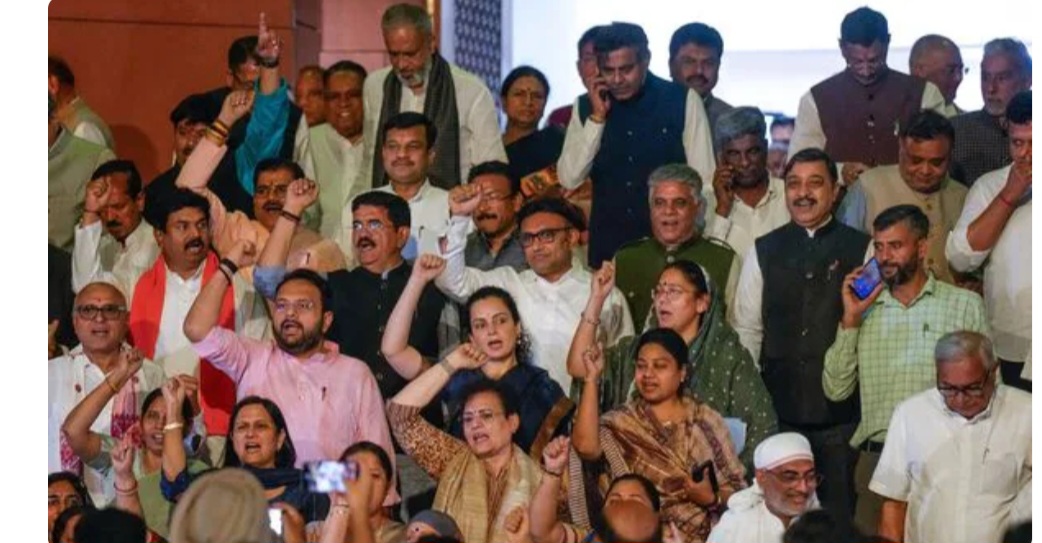
BJP’s ‘Women’s Reservation Bill’ Strategy Sparks Political Firestorm The debate around the Women’s Reservation Bill has taken a sharp political turn, with opposition parties accusing the ruling Bharatiya Janata Party (BJP) of turning a crucial reform into a calculated political maneuver. Critics argue that the government, led by Prime Minister Narendra Modi, was fully aware that the bill required a two-thirds majority in the Lok Sabha to pass, yet proceeded in a way that made its failure almost inevitable.
According to political observers, the introduction of the controversial delimitation issue alongside the bill was not accidental. Opposition parties, which have consistently opposed delimitation in its current form, reacted strongly, leading to a predictable deadlock.
The resulting failure of the bill during voting has fueled allegations that the BJP engineered the situation to shift blame onto its rivals. Soon after the bill was defeated, the Parliamentary Affairs Minister announced its withdrawal, raising further suspicion about the government’s intent. Analysts suggest that if there had been genuine commitment to women’s empowerment, the government would have sought broader consensus instead of linking it with contentious reforms that divide political opinion.
The BJP’s move to hold nationwide protests following the bill’s failure has also come under scrutiny. Opposition leaders claim this is an attempt to project themselves as champions of women’s rights while portraying rival parties as obstructing progress. However, critics argue that such actions reflect political opportunism rather than sincere policymaking.
The timing of these developments has added another layer to the controversy. With upcoming elections in states like Tamil Nadu and West Bengal, analysts believe the BJP is strategically leveraging the Women’s Reservation Bill to appeal to female voters. This, they say, is part of a broader effort to expand its electoral base in regions where it seeks stronger foothold.
Many experts warn that using sensitive issues like women’s representation for electoral gain could undermine democratic values. They emphasize that meaningful reform requires inclusive dialogue and genuine intent, not political theatrics.
In conclusion, the fallout from the Women’s Reservation Bill has intensified the political battle between the BJP and opposition parties. While the ruling party positions itself as a defender of women’s rights, critics argue that its actions reveal a calculated strategy aimed more at electoral gains than legislative success.







Comments
Sign in with Google to comment.