Hyderabad/New Delhi, May 11:
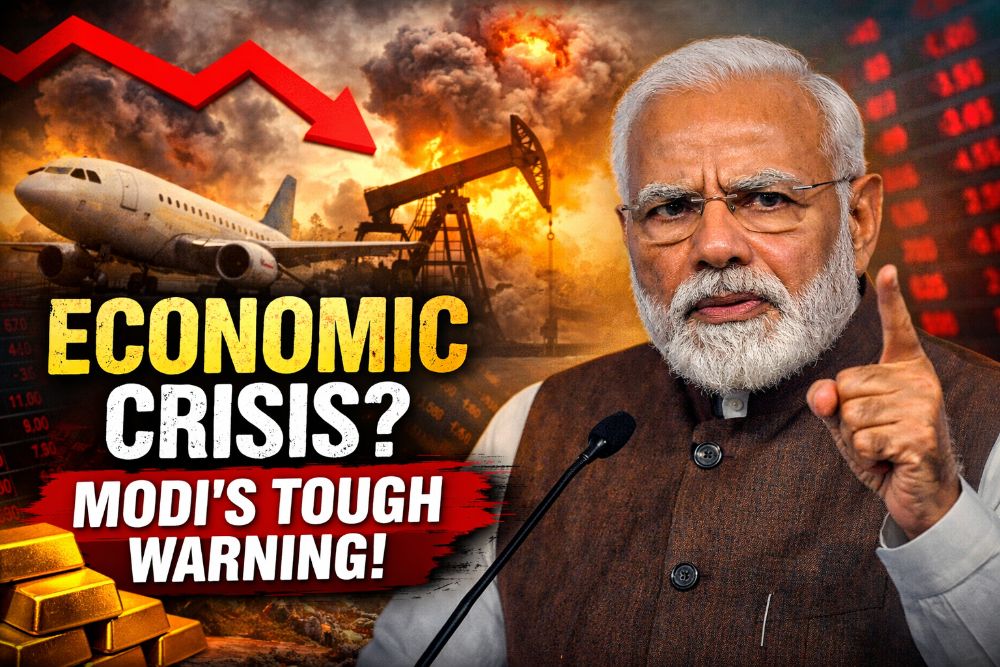
Prime Minister Narendra Modi’s latest speech in Hyderabad has sparked intense debate after he urged citizens to cut spending, avoid buying gold, and reduce foreign travel. After repeatedly claiming that India’s economy remains strong despite global turmoil, Modi’s appeal is being seen as an indirect admission that mounting international pressures are beginning to weigh heavily on the country.
For years, the government promoted slogans such as “Atmanirbhar Bharat,” “Make in India,” and “Vocal for Local,” projecting confidence in India’s economic resilience. But Modi’s call for families to tighten their budgets has raised uncomfortable questions. Critics argue that if the economy is truly robust, there should be no need for the Prime Minister to ask ordinary citizens to make personal sacrifices to protect the nation.
Among the nine austerity measures outlined by Modi were a temporary halt to gold purchases, an end to lavish destination weddings abroad, and a sharp reduction in foreign vacations. He urged Indians to spend within the country, support domestic tourism, and cut dependence on imports that put pressure on foreign exchange reserves.
Modi also called on citizens to reduce edible oil consumption, avoid imported products, and use less petrol and diesel. He encouraged greater adoption of electric vehicles, wider use of public transport, and a return to work-from-home practices to cut fuel consumption. Farmers were asked to reduce urea use and move toward more sustainable agricultural methods
The timing of the appeal is significant. Rising crude oil prices, instability in West Asia, and increasing import costs are putting fresh strain on India’s economy. Modi’s message that “every family’s savings will strengthen the nation” is being interpreted by many as a warning that tougher economic conditions may lie ahead
. What was presented as a patriotic call for economic discipline has quickly turned into a political flashpoint. Supporters describe it as responsible leadership during uncertain times, while opponents say it exposes the gap between the government’s optimistic narrative and the realities facing millions of households already struggling with inflation and rising living costs.








Comments
Sign in with Google to comment.