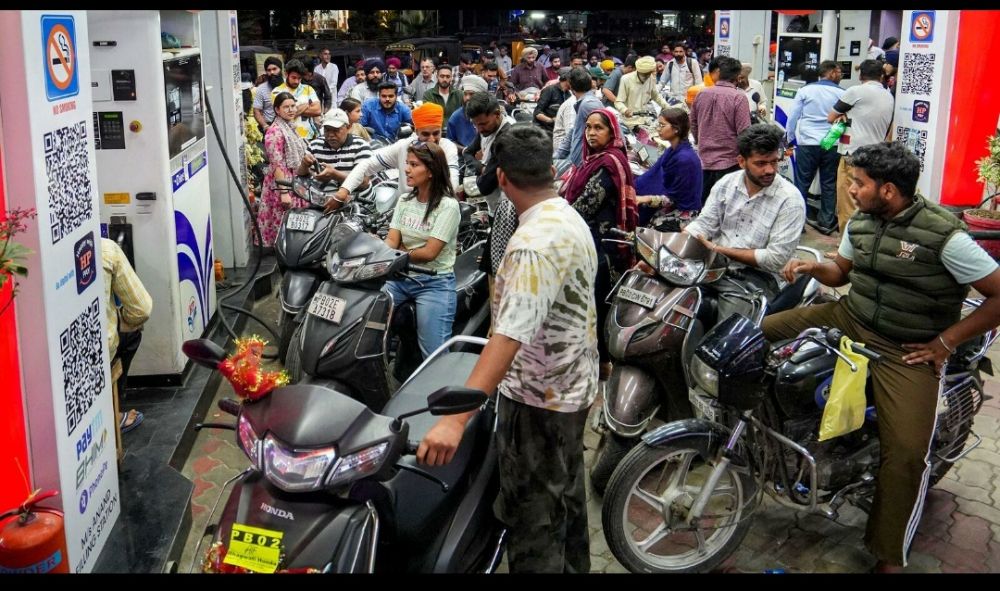
Global crude oil markets are showing signs of cooling, but Indian consumers are not getting any relief at the pump. Instead, petrol and diesel prices continue to climb, creating a sharp disconnect between international trends and domestic reality.
Brent crude has softened in recent sessions amid easing geopolitical tensions and expectations of improved supply stability. Normally, such a decline should bring down fuel costs for importing nations like India, but that transmission is clearly missing at the retail level.
In India, state-run oil marketing companies have recently raised fuel prices to recover earlier losses. For months, they absorbed high crude costs, and the current hikes are being seen as a delayed correction rather than a reflection of present global conditions.
Adding to the burden, taxes and duties imposed by both Centre and states account for a significant share of petrol and diesel prices. Even when crude prices fall, these fixed components keep retail rates elevated, limiting any immediate relief for consumers.
Currency fluctuations and import dependency further worsen the situation. Since India imports most of its crude oil, even a small rupee weakness against the dollar can offset global price declines, keeping domestic fuel costs high.
The result is growing public frustration and a widening policy debate: if global oil is cooling, why are Indian fuel prices still burning pockets? Until structural reforms in taxation and pricing pass-through are addressed, this mismatch is likely to continue.













Comments
Sign in with Google to comment.